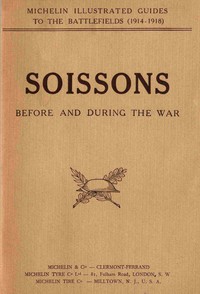
Soissons before and during the war by Pneu Michelin (Firm)
This isn't a story in the traditional sense. There's no plot with a beginning, middle, and end. Instead, 'Soissons before and during the war' presents a stark, factual comparison. The book is structured like a typical Michelin travel guide of the era, detailing hotels, restaurants, road conditions, and points of interest in the French city of Soissons.
The Story
The 'story' is told through photographs and descriptions. Each notable site in the city—its grand cathedral, ancient abbey, bustling market square—gets two entries. First, you see it as it was before 1914: a thriving, historic city captured in crisp photos. Then, immediately following, you see the 'during the war' version. The same angles now show hollow shells of buildings, streets littered with debris, and majestic structures reduced to skeletal frames. The text matter-of-factly notes distances, accessibility for cars, and what services are available amidst the destruction. The narrative tension comes entirely from this side-by-side view. It documents the erasure of a world with chilling efficiency.
Why You Should Read It
What gets me about this book is its quiet power. It doesn't scream about the horrors of war. It just shows you, in the dry language of a tour guide, what was lost. You’re not being told to feel sad; you’re being given the before-and-after evidence and left to sit with it. It turns history from a distant fact into something visceral. One minute you're reading a recommendation for a charming café, and the next you're looking at its cratered foundation. It makes the scale of the destruction personal and specific, not just a statistic. It’s also a fascinating slice of history about how people began to process and literally navigate a reshaped world.
Final Verdict
This is a unique read for a specific audience. It’s perfect for history buffs who want to go beyond battle summaries and see the war's impact on everyday life. If you're interested in World War I, architecture, or how societies document trauma, this is a compelling primary source. It’s also great for anyone who likes unconventional books that tell a story without a single character. Just don't go in expecting a novel. Go in expecting a quiet, devastating tour, guided by a tire company, and you’ll be blown away.
Legal analysis indicates this work is in the public domain. Thank you for supporting open literature.