1

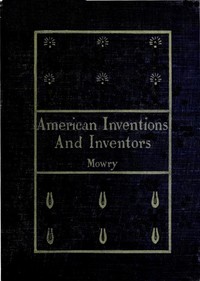
American Inventions and Inventors — Key Ideas to Explore
(0 User reviews)
334
Project Gutenberg
2014
Not confirmed
Inventions
Readers of public-domain and historical texts
Project Gutenberg digital edition
en
Edition facts
Words
77,840
Reading time
339 min
Text sections
13
American Inventions and Inventors — Key Ideas to Explore can be approached with a clearer sense of reading commitment from its source measurements: 77,840 words, 5 hr 39 min estimated reading time, and 13 detected text sections.
The text analysis averages about 18.4 words per sentence, while the detected sections provide another way to judge how the source is divided.
Project Gutenberg metadata also associates the work with “Inventions,” connecting these edition facts with the source record’s subject description.
Source:
Project Gutenberg record #47258
This editorial note examines how the Mowrys' 1900 textbook frames invention as moral progress, contrasting its stated pedagogical aims with the actual content of excerpts on wool and leather manufacture.
Read the complete public-domain text at its original source.
Read on Project GutenbergThe Mowrys' preface declares that a school history should show 'the progress of mankind—the uplift of humanity' through inventions, yet the excerpts on woolen cloth and leather making read less like a narrative of progress and more like a technical manual. The authors shift from lofty claims about 'overcoming nature' to detailed descriptions of sheep shearing, carding, and fulling mills, with no mention of the inventors named in the title. This gap between the book's stated philosophy and its granular, process-oriented content raises questions about how the catalog subject 'Inventions' actually manifests in the text.
The Preface vs. The Practice
The preface argues that history should be taught as 'reading books' to foster a love for the subject, and that inventions reveal 'upward tendencies.' Yet the excerpts do not follow this arc. The wool chapter begins with a visit to a sheep ranch, then walks through sorting, scouring, carding, spinning, weaving, and finishing—each step described without reference to a specific inventor or breakthrough. The authors note that 'the quality of the cloth depends upon the quality of the wool used, the quality of the machinery which makes the cloth, and the skill of the workmen,' a statement that treats invention as an anonymous, cumulative process rather than a series of heroic acts. This tension between the preface's rhetoric of uplift and the excerpts' practical, almost industrial tone suggests the book may function more as a descriptive survey of manufacturing than as a biography of inventors.
The Absent Inventors
Despite the title American Inventions and Inventors, the excerpts name no inventors. The wool chapter mentions the 'mule or the spinning jenny' but does not credit Samuel Crompton or James Hargreaves—both British, not American. The leather chapter introduces the traveling shoemaker 'Crispin' but treats him as a folk figure, not an innovator. The catalog subject 'Inventions' thus appears misleading: the text seems more concerned with describing how things are made than with attributing inventions to named individuals. The Mowrys may have intended the book to show the 'progress of civilization' through material culture, but the excerpts imply that invention is a collective, incremental process rather than the work of great men. Without access to the full text, it is unclear whether later chapters introduce specific inventors, but the early chapters do not.
Pedagogical Voice and Audience
The authors explicitly address children, using direct address ('Let us see now if we can understand how woolen cloth is made') and vivid scenarios ('Let us visit one of these sheep ranches'). The prose is clear and concrete, avoiding abstract theory. Yet the level of technical detail—explaining warp, filling, harness, and fulling mill—suggests an audience capable of following industrial processes. The preface's claim that children dislike history and that books should be 'used as reading books' frames the work as a corrective, but the excerpts do not read as stories. Instead, they resemble a textbook for manual training or domestic science. The authors' voice is authoritative but not celebratory; they note that American machinery 'is of such improved patterns that we are generally able to compete in price,' a pragmatic assessment rather than a patriotic boast. This tone may reflect the book's origin as a school text published in 1900, when industrial education was gaining prominence.
Readers approaching American Inventions and Inventors through the catalog subject 'Inventions' should adjust expectations: the excerpts suggest a work more focused on manufacturing processes than on individual inventors. The book's value may lie in its detailed descriptions of late-19th-century industrial techniques and its reflection of contemporary educational philosophy. To assess the full scope, one would need to examine later chapters for biographical content, but the early sections offer a rich, if unexpected, portrait of how invention was taught as a collective, material practice.
That rainy afternoon, I kept returning to the Mowrys’ odd insistence that wool and leather work were moral triumphs. It felt less like history, more like quiet faith. The book’s earnestness lingered, so I reached for Famous Days in the Century of Invention — A Closer Reading, almost without deciding to. Different tone, same strange trust in progress. The rain never stopped, and neither did that thought.
There are no reviews for this eBook.
There are no comments for this eBook.
Reader reflection
Before you leave, reflect on the book
Use these questions to collect your thoughts before moving on.
Your progress
0
/
10
2
Was reading this book enjoyable?
3
Is this a title you would suggest to others?
4
How demanding did the text feel?
5
Did this book create an emotional response?
6
What did you appreciate most?
7
Did anything about the book feel genuinely new?
8
Would you start a conversation about this book?
9
What did this book teach you most?
10