1

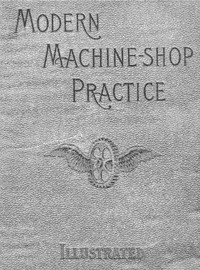
Modern Machine-Shop Practice, Volumes I and II — Reading Companion
(0 User reviews)
1681
Project Gutenberg
2012
Not confirmed
Machinery; Electric machinery; Machine-shop practice
Readers of public-domain and historical texts
Project Gutenberg digital edition
en
Edition facts
Words
801,590
Reading time
3486 min
Text sections
149
The catalog record for Modern Machine-Shop Practice, Volumes I and II — Reading Companion provides practical reading context through 801,590 words, 58 hr 6 min estimated reading time, and 149 detected text sections.
The text analysis averages about 24.5 words per sentence, while the detected sections provide another way to judge how the source is divided.
Project Gutenberg metadata also associates the work with “Machinery,” connecting these edition facts with the source record’s subject description.
Source:
Project Gutenberg record #39225
Joshua Rose's 1887 manual guides mechanics through machine-shop operations with over 3000 engravings, practical instruction in simple terms, and a progressive method from apprentice to skilled worker, avoiding theory and higher mathematics.
Read the complete public-domain text at its original source.
Read on Project GutenbergJoshua Rose’s Modern Machine-Shop Practice opens with a clear declaration of purpose: it is a guide to “the operations of the best equipped and best managed workshops,” written from the viewpoint of “approved practice” rather than theory. The preface, dated 1887, grounds the work in the author’s thirty-one years as a practical mechanic and contributions from skilled workmen. Rose promises that the language is “that of the workshop,” and that mathematical problems involve “simple arithmetical terms” only—no algebra or higher mathematics. This framing immediately signals a text designed for hands-on learning, not academic study.
The table of contents reveals an exhaustive scope: from the construction of machine tools and work-holding appliances to hand tools, steam engines, and boilers. The work also includes a Pronouncing and Defining Dictionary of technical terms. With over three thousand engravings, the book aims to be a complete manual for machinists, draughtsmen, wood-workers, and engineers alike.
Progressive Structure and Practical Focus
The preface states that the “method of treatment is strictly progressive, following the successive steps necessary to becoming an intelligent and skilled mechanic.” This suggests that the book is organized to build knowledge incrementally, starting with fundamental concepts and advancing to complex operations. The excerpts show a detailed table of contents covering topics like wood-working machinery, pattern making, and forging. Each chapter appears to break down processes into numbered steps and specific machine types, such as “Circular Saws” with subheadings on gauges, tension, and sharpening. This structure would allow a reader to follow a logical sequence or dip into a particular skill as needed.
Illustrations as Core Instruction
Rose emphasizes that the “illustrations, over three thousand in number, are taken from modern practice” and represent machines and methods used in leading manufactories. The excerpts reference specific figures, such as “The Edgemore Iron Works’ hydraulic forging press” and “Machine for forging threads on rods.” These engravings are not decorative; they are integral to the instruction, showing the exact configuration of tools and machines. For example, the section on wood-working machinery includes diagrams for “the construction of the feed rolls” and “adjustment of the work table.” A reader would rely on these visuals to understand mechanical details that text alone cannot convey.
Workshop Language and Terminology
Rose explicitly states that “the language is that of the workshop,” and the excerpts confirm this with terms like “gumming, gulleting or chamfering machine” and “swing frame saws.” The inclusion of a “Pronouncing and Defining Dictionary” at the end of the work underscores the importance of precise terminology. The dictionary aims to include “all the technical words and phrases of the machine shop, both those of recent origin and many old terms that have never before appeared in a vocabulary of this kind.” This feature would help apprentices and experienced workers alike to standardize their vocabulary and avoid misunderstandings in the shop.
Scope Beyond Machining: Steam Engines and Boilers
Although the title focuses on machine-shop practice, the preface indicates that the work also covers “the construction and management of steam engines and boilers.” This broadens the audience to include engineers and operators of stationary power plants. The table of contents lists chapters on forging, wood-working, and pattern making, but the preface promises treatment of “the care and management of engines and boilers” as well. A reader interested solely in metal-cutting might find unexpected value in the sections on steam power, which were essential to nineteenth-century manufacturing. The book thus serves as a comprehensive reference for the entire mechanical workshop environment.
Rose’s manual is best approached as a reference to be consulted alongside actual shop work, not read straight through. The progressive structure suits a learner, while the detailed index and dictionary support quick lookup. Readers should pay close attention to the engravings, which often contain the core of the instruction. The work’s emphasis on “approved practice” over theory means that it reflects the methods of its era—useful for historical understanding or for those working with period machinery, but not a guide to modern safety standards or digital controls.
There's something patient in that old manual’s way of teaching—step by step, no hurry, just hands finding their rhythm. It made me think of The Draughtsman's Handbook of Plan and Map Drawing Including instructions for the preparation of engineering, architectural, and mechanical drawings. — Themes and Context, how drawing and machining both ask for the same quiet trust in small, careful motions. That feeling stayed with me.
There are no reviews for this eBook.
There are no comments for this eBook.
Reader reflection
What did you think of this book?
Answer a few questions and save a private reflection on this device.
Your progress
0
/
10
2
How much did you enjoy the reading experience?
3
Is this a title you would suggest to others?
4
Did the language feel accessible?
5
Did any part of the book stay with you emotionally?
6
How original did the book feel?
7
Did you relate to its people, ideas, or situations?
8
How useful did the reading feel?
9
What did this book teach you most?
10