1


The Romance of the Reaper — A Closer Reading
(0 User reviews)
342
Project Gutenberg
2010
Not confirmed
Harvesting machinery
Readers of public-domain and historical texts
Project Gutenberg digital edition
en
Edition facts
Words
39,355
Reading time
172 min
Text sections
5
This digital edition of The Romance of the Reaper — A Closer Reading is described by source-level measurements including 39,355 words, 2 hr 52 min estimated reading time, and 5 detected text sections.
The text analysis averages about 18.5 words per sentence, while the detected sections provide another way to judge how the source is divided.
Project Gutenberg metadata also associates the work with “Harvesting machinery,” connecting these edition facts with the source record’s subject description.
Source:
Project Gutenberg record #32702
Herbert N. Casson's 1908 industrial history traces the reaper's evolution from early patents to the International Harvester Company, blending mechanical detail with boosterish prose and a panoramic view of agricultural mechanization.
Read the complete public-domain text at its original source.
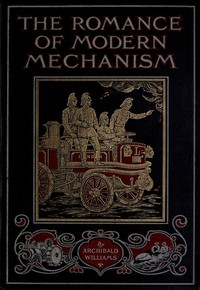
Read on Project GutenbergHerbert N. Casson opens The Romance of the Reaper with a declaration that the United States owes more to the reaper than to the factory or the railroad. This claim sets the tone for a work that is part technical history, part corporate celebration. Casson writes in a brisk, declarative style, often piling up statistics—700,000 machines a year, 25,000 employees, $120,000,000 in capital—to convey scale. Yet he also reaches for the picturesque, calling a hay tedder “a kind of steel mule, with an incurably bad temper.” The narrative voice shifts between boosterish enthusiasm and matter-of-fact enumeration, a tension that shapes the book’s pacing.
A Medley of Mechanics and Millionaires
Casson explicitly calls his book “a medley of mechanics, millionaires, kings, inventors and farmers.” The preface promises a story “written in the fashion of romance,” and the excerpts bear this out. He moves quickly from the Swift epigraph to a description of the International Harvester Company’s sprawling operations: a steel plant, coal lands in Kentucky, 100,000 acres of trees, and 40,000,000 tons of ore. The prose is dense with numbers—65,000 freight cars, 42,000 agents—but Casson leavens the data with vivid metaphors. The company is “like the original United States—a union of thirteen industrial colonies.” This blend of industrial reportage and patriotic analogy gives the opening chapters a breathless, almost promotional rhythm.
The Voice of the Booster-Historian
Casson’s narrative voice is consistently optimistic and grand. He describes the reaper as having “done good without any backwash of evil,” a claim that frames the book as a moral as well as a mechanical history. His sentences are often long, piling up clauses: “Its properties are so widespread that no member of the company has seen them all. To run around their circle would be a trip of 15,000 miles.” Yet he also inserts colloquial asides—the tedder has “an incurably bad temper”—that lighten the tone. This alternation between statistical gravity and folksy humor creates a distinctive pacing: the reader is shuttled from awe at scale to amusement at a machine’s personality. The voice is that of a popularizer, not a technician.
Pacing Through Enumeration and Anecdote
The excerpts reveal a book that accelerates through lists and decelerates for set pieces. Casson catalogs “thirty-seven different species of machines” and then pauses to describe a manure-spreader that spares “barefooted women” their old drudgery. He notes that the farmer’s wife “has been the last one to be considered” before detailing cream separators and gasolene engines. This pattern—broad claim, specific example, human detail—controls the pace. The prose moves quickly when aggregating facts, then slows for a vignette. The effect is cinematic: wide shots of the Harvester empire cut to close-ups of individual machines or workers. The book’s rhythm thus mirrors its subject: the relentless expansion of industrial agriculture, punctuated by moments of human interest.
Readers should approach The Romance of the Reaper as a period piece of industrial advocacy, not a neutral history. Casson’s enthusiasm for his subject is infectious, but his evidence is selective. The book rewards attention to its rhetorical strategies—how numbers are marshaled, how machines are personified, how the farmer is cast as both beneficiary and hero. For those interested in the language of early twentieth-century business writing, or in the cultural framing of agricultural technology, this text offers a rich, if partial, view.
That rainy afternoon, I lingered over Casson’s account of steel teeth and wheat fields, his certainty that every lever and belt meant progress. It felt like watching a machine breathe. Later, wanting that same mechanical quiet, I drifted toward Pumps and Hydraulics, Part 1 (of 2) — Inside the Classic, where water does the work and the prose is just as patient. One book simply led to the next.
There are no reviews for this eBook.
There are no comments for this eBook.
Reader reflection
Before you leave, reflect on the book
Use these questions to collect your thoughts before moving on.
Your progress
0
/
10
2
How did the book work for you overall?
3
Is this a title you would suggest to others?
4
What was the reading difficulty like?
5
Which element worked best for you?
6
Would this book work well in a reading group?
7
How would you describe its reading pace?
8
What was its emotional impact?
9
In one sentence, what did you learn?
10