1

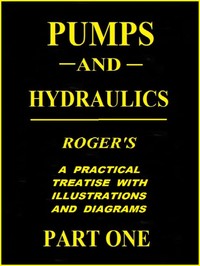
Pumps and Hydraulics, Part 1 (of 2) — Inside the Classic
(0 User reviews)
1453
Project Gutenberg
2018
Not confirmed
Pumping machinery; Hydraulic machinery
Readers of public-domain and historical texts
Project Gutenberg digital edition
en
Edition facts
Words
105,303
Reading time
458 min
Text sections
85
Pumps and Hydraulics, Part 1 (of 2) — Inside the Classic can be approached with a clearer sense of reading commitment from its source measurements: 105,303 words, 7 hr 38 min estimated reading time, and 85 detected text sections.
The text analysis averages about 21.6 words per sentence, while the detected sections provide another way to judge how the source is divided.
Project Gutenberg metadata also associates the work with “Pumping machinery,” connecting these edition facts with the source record’s subject description.
Source:
Project Gutenberg record #56339
This editorial note examines how the opening epigraphs, glossary, and technical excerpts of Rogers' 1905 manual guide a first reading of Part 1, focusing on the interplay between mechanical principles and practical piping details.
Read the complete public-domain text at its original source.
Read on Project GutenbergThe book opens with two epigraphs—one from Frank Allen praising scientific training as "the one thing needful," another from Carlyle declaring labor honorable. These set a tone that mechanical work is intellectually grounded, not merely manual. The dedication to two gentlemen "without fear and without reproach" further frames the text as a serious, principled endeavor. A first reader should note this moral framing: the author wants the reader to approach pumps with reasoned thought, not rote steps.
Epigraphs as a Lens for the Technical Content
The epigraphs by Frank Allen and Carlyle are not decorative. Allen's phrase "the one thing needful" elevates science above mere skill, while Carlyle's motto equates labor with honor. These appear before any technical matter, suggesting the author intends the reader to see pump mechanics as a branch of applied science worthy of serious study. The dedication to "Gentlemen without fear and without reproach" reinforces this—the ideal reader is a principled, thinking practitioner. When later excerpts discuss vacuum chambers or piping layouts, the reader is primed to consider the why behind each component, not just the how.
The Glossary as a Starting Point, Not an Afterthought
The table of contents places a "Glossary of Pump and Hydraulic Terms" on page 17, immediately after introductory considerations. This is unusual for a manual—most bury glossaries at the end. By front-loading definitions, the author signals that precise terminology is essential. A first reader should consult this glossary early, because later excerpts use terms like "air chamber," "vacuum chamber," and "slippage" without redefinition. For instance, the description of a vacuum chamber explains its action as "practically the reverse" of an air chamber, assuming the reader already knows what an air chamber does. The glossary bridges that gap.
From Abstract Principles to Concrete Piping Diagrams
The excerpt on "Piping a Pump" (Fig. 204) shows how the book moves from general hydro-mechanics to specific layouts. The text describes a foot valve and strainer placed "not less than a foot from the bottom of the well," a detail that reflects practical experience. It also notes that flange joints should be arranged so they "may be disconnected without unscrewing any part of the suction pipe"—a repair-oriented insight. This section exemplifies the book's method: it states a principle (e.g., vacuum chambers smooth flow), then gives a concrete example with dimensions and alternatives, such as making a vacuum chamber from "a piece of pipe of the same diameter as the suction."
The Manufacturer's Questionnaire: A Window into Service Conditions
Near the end of the excerpts, the text reproduces questions "extracted from the catalogue of an extensive manufacturer," beginning with "First—To what service is it to be applied?" This is a striking shift: the author steps back from instruction to show how a professional would assess a pump's requirements. The implication is that a pump cannot be properly selected or designed without understanding its service conditions—a point that ties back to the epigraphs about thoughtful labor. For a first reader, this section underscores that the manual is not a recipe book but a guide to engineering judgment.
Readers new to this manual should treat the opening epigraphs and glossary as integral to the technical chapters. The book rewards those who read sequentially, as later sections build on earlier definitions and principles. The excerpts show a consistent emphasis on reasoned design over blind copying—a philosophy that makes this more than a parts catalog.
Holding this old manual, I remembered my grandfather’s workbench—his metal rule, worn smooth by thumb pressure. Pumps and hydraulics felt like arithmetic, yet the patience inside its pages reminded me of hours lost in The Romance of Modern Mechanism With Interesting Descriptions in Non-technical Language of Wonderful Machinery and Mechanical Devices and Marvellously Delicate — Background and Themes. Both whispered that even iron has a quiet heart.
There are no reviews for this eBook.
There are no comments for this eBook.
Reader reflection
Record your reading impressions
A brief reflection can help important ideas stay with you longer.
Your progress
0
/
10
2
What was your overall reaction to the book?
3
Is this a title you would suggest to others?
4
What was the reading difficulty like?
5
Did the book give you something worth debating?
6
How would you describe its reading pace?
7
What was its emotional impact?
8
Do you expect to return to this book?
9
In one sentence, what did you learn?
10