1

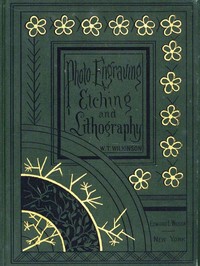
Photo-engraving, Photo-etching and Photo-lithography in Line and Half-tone Also Collotype and Heliotype — Reading Companion
(0 User reviews)
630
Project Gutenberg
2016
Not confirmed
Photomechanical processes
Readers of public-domain and historical texts
Project Gutenberg digital edition
en
Edition facts
Words
74,703
Reading time
325 min
Text sections
37
This digital edition of Photo-engraving, Photo-etching and Photo-lithography in Line and Half-tone Also Collotype and Heliotype — Reading Companion is described by source-level measurements including 74,703 words, 5 hr 25 min estimated reading time, and 37 detected text sections.
The text analysis averages about 25.7 words per sentence, while the detected sections provide another way to judge how the source is divided.
Project Gutenberg metadata also associates the work with “Photomechanical processes,” connecting these edition facts with the source record’s subject description.
Source:
Project Gutenberg record #52378
W. T. Wilkinson's practical manual on photo-engraving, photo-etching, and photo-lithography, revised and enlarged by Edward L. Wilson. The text combines step-by-step instructions, collated hints from various sources, and a mosaic of international techniques, with a direct, instructive voice that shifts between authorial modesty and editorial authority.
Read the complete public-domain text at its original source.
Read on Project GutenbergW. T. Wilkinson opens his preface by calling his first effort at bookmaking a "crude attempt," a self-deprecating tone that contrasts with the meticulous, numbered sequences that follow. The American edition, revised by Edward L. Wilson, immediately asserts its expanded scope: Wilson has "boiled down the best points from current publications in France and Germany" and added chapters from J. O. Mörch's Handbuch der Chemigraphie und Photochemigraphie. The collaborative voice—Wilkinson's modest English author and Wilson's confident American editor—creates a layered narrative of practical knowledge.
A Mosaic of Hints and International Sources
Chapter VI, titled "Hints from All Sources," explicitly frames the book as a compilation. Wilson writes that "all the hints that are obtainable are very welcome" and that he has "collated a few from various sources, and make a mosaics of them here for the general good." This metaphor of a mosaic captures the book's method: it does not claim originality but assembles proven techniques. The chapter advises the would-be photo-engraver to study a photographic textbook and Burnet's Essays on Art, emphasizing that "the first will not only teach the best formula for the production of negatives, but it will also enjoin the importance of being careful, cleanly, and exact." The voice here is direct and prescriptive, typical of the manual's instructional sections.
The Twenty-Eight Step Sequence
The book's most striking structural feature is a numbered list of twenty-eight manipulations, from "Planing the plate" to "Cutting out and mounting the plate." This sequence appears as a guide "from the beginning to the end of the work," and its exhaustive detail—including steps like "double besprinkling and burning in of asphaltum" and "chiselling out the lights of the picture"—reveals the painstaking nature of the craft. The list is not merely a table of contents but a compressed workflow, each step a discrete operation. The language is technical and precise, with no rhetorical flourishes; the reader is expected to follow the order exactly. This procedural backbone gives the manual a rhythm of incremental progress.
Two Styles of Drawing and the Camera's Authority
In the section "As to the Drawing," Wilkinson distinguishes two methods: "fac simile drawing" (using only lines) and "drawing in wash." He explains that the line method is used for wood engraving, copper or steel engraving, and "all the methods for automatically producing blocks for relief printing." The text insists that the artist must understand both the principles of photography and the capabilities of the specific reproductive process. The book's epigraph—"The camera is mightier than the pen or the pencil"—announces a technological confidence that runs through the manual. Yet the instructions also acknowledge the limits of automation: success depends on "industrious, careful practice."
Readers approaching this manual should treat it as a period document of late-nineteenth-century photomechanical practice. The collaborative authorship—Wilkinson's English original and Wilson's American additions—creates a dual perspective on the craft. Pay attention to the shifts in voice: Wilkinson's self-effacing preface, Wilson's editorial interjections, and the borrowed passages from German and French sources. The book's value lies in its concrete detail, not in narrative or argument. For those interested in the history of printing technology, the numbered sequences and collated hints offer a rare glimpse into the workshop knowledge of the era.
There’s a peculiar comfort in a book that admits its own patchwork, as Wilkinson’s manual does—hints collated, methods borrowed, a quiet mosaic of know-how. It reminds me of the similar, unhurried craftsmanship in The Romance of the Reaper — A Closer Reading, where invention feels less like a breakthrough and more like a patient gathering of small, practical truths. Both feel like old friends speaking softly. Photo-engraving holds that same steady hum.
There are no reviews for this eBook.
There are no comments for this eBook.
Reader reflection
What was your reading experience?
Capture what you thought, learned, and would like to remember.
Your progress
0
/
10
2
How did the book work for you overall?
3
Would you pass this book on to a friend?
4
How demanding did the text feel?
5
Did you gain anything practical from the text?
6
How personally connected did you feel to the book?
7
Did the book meet your expectations?
8
Did this book create an emotional response?
9
What is the main idea you are taking away?
10