1

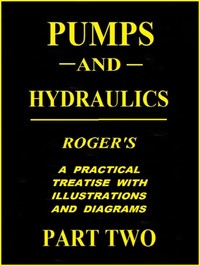
Pumps and Hydraulics, Part 2 (of 2) — A Reader’s Guide
(0 User reviews)
879
Project Gutenberg
2018
Not confirmed
Pumping machinery; Hydraulic machinery
Readers of public-domain and historical texts
Project Gutenberg digital edition
en
Edition facts
Words
93,479
Reading time
407 min
Text sections
81
The source record for Pumps and Hydraulics, Part 2 (of 2) — A Reader’s Guide measures this digital text at 93,479 words, 6 hr 47 min estimated reading time, and 81 detected text sections.
The text analysis averages about 16.3 words per sentence, while the detected sections provide another way to judge how the source is divided.
Project Gutenberg metadata also associates the work with “Pumping machinery,” connecting these edition facts with the source record’s subject description.
Source:
Project Gutenberg record #57639
This editorial note examines how the catalog subjects 'Pumping machinery' and 'Hydraulic machinery' align with the technical content of Part Two, focusing on turbine pumps, air compressors, and injectors as shown in excerpts.
Read the complete public-domain text at its original source.
Read on Project GutenbergThe catalog subjects for this volume—'Pumping machinery' and 'Hydraulic machinery'—accurately reflect its contents, but the excerpts reveal a more specialized emphasis. Part Two devotes considerable space to turbine pumps, air compressors, and injectors, each treated with detailed mechanical descriptions and quantitative data. For instance, the Worthington turbine pump is described with 'triple vanes' for impeller balance and 'diffusion vanes' for energy conversion, while the Byron Jackson pump features 'spirally-curved water passages.' These examples show that the work is not a general survey but a technical manual focused on specific designs and their operational principles.
Turbine Pumps as a Central Subject
The excerpts devote substantial attention to turbine pumps, a subcategory of centrifugal pumps. The Worthington turbine pump is described in detail, noting its 'diffusion vanes' that form 'tangential, expanding ducts' to convert energy efficiently. The text claims that this design 'has created an entirely new field of application for centrifugal pumps,' including mine drainage and water-works. The Byron Jackson pump is similarly treated, with 'rotating impellers containing spirally-curved water passages' and 'fixed guide passages between successive impellers.' These descriptions are accompanied by quantitative claims, such as the Worthington pump's capacity of '35,000 gallons per minute against 160 feet head' at the St. Louis World's Exposition. The catalog subject 'Pumping machinery' thus encompasses a focused treatment of turbine pumps as a distinct technological advance.
Comparative Claims and Operational Details
The text makes explicit comparative claims about turbine pumps versus reciprocating pumps. It states that the turbine pump occupies 'less than one-third' the space and costs 'only about one-half' as much, including the motor. It also emphasizes reliability: 'there are no rubbing surfaces exposed to the water,' and parts can be replaced 'in less than one hour.' These assertions are presented as evidence of the turbine pump's superiority for 'isolated stations.' The excerpts also note that the pump can be made of 'acid-resisting metal' for mine water, indicating attention to practical, corrosive environments. Such details align with the catalog subject 'Hydraulic machinery' by showing how hydraulic principles are applied to real-world engineering challenges.
Scope Beyond the Catalog Subjects
While the catalog subjects focus on pumps and hydraulics, the excerpts reveal additional content. The table of contents lists sections on 'Air Compressors,' 'Injectors and Ejectors,' and 'Condensing Apparatus,' which extend beyond pure pumping machinery into pneumatic and steam-related devices. The preface mentions a 'great tannery' anecdote, suggesting the text includes historical or practical context. However, the excerpts do not provide full coverage of these topics; for example, the air compressor section is only indicated by page ranges. Thus, the catalog subjects underrepresent the work's breadth, which includes air handling and steam auxiliaries. Readers should expect a mix of pump-specific engineering and broader hydraulic and pneumatic machinery.
Readers approaching this volume should note that its technical depth varies by section. The turbine pump discussions are richly detailed with design specifics and performance data, while other topics like air pumps or injectors may receive less thorough treatment. The work is best used as a reference for late-19th-century pump engineering, particularly for centrifugal and turbine designs, rather than as a comprehensive textbook on all hydraulic machinery.
There’s a quiet satisfaction in understanding how the things around us actually work—the hum of a compressor or the pull of an injector—that lingers after reading. That patient, mechanical curiosity reminds me of Mechanics of the Household A Course of Study Devoted to Domestic Machinery and Household Mechanical Appliances — Context and Discussion, where the everyday becomes quietly remarkable. I found myself thinking of that book long after closing it, much like this one.
There are no reviews for this eBook.
There are no comments for this eBook.
Reader reflection
What was your reading experience?
Capture what you thought, learned, and would like to remember.
Your progress
0
/
10
2
How did the book work for you overall?
3
Is this a title you would suggest to others?
4
How easy was the book to follow?
5
Was the book moving at the right speed?
6
How distinctive were its ideas or approach?
7
Would this book work well in a reading group?
8
How did the reading compare with what you expected?
9
What is the main idea you are taking away?
10