1

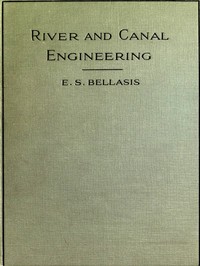
River and Canal Engineering, the characteristics of open flowing streams, and the principles and methods to be followed in dealing with them. — Context and Discussion
(0 User reviews)
1298
Project Gutenberg
2018
Not confirmed
Rivers; Canals; Hydraulic engineering
Readers of public-domain and historical texts
Project Gutenberg digital edition
en
Edition facts
Words
58,790
Reading time
256 min
Text sections
8
The source record for River and Canal Engineering, the characteristics of open flowing streams, and the principles and methods to be followed in dealing with them. — Context and Discussion measures this digital text at 58,790 words, 4 hr 16 min estimated reading time, and 8 detected text sections.
The text analysis averages about 18.9 words per sentence, while the detected sections provide another way to judge how the source is divided.
Project Gutenberg metadata also associates the work with “Rivers,” connecting these edition facts with the source record’s subject description.
Source:
Project Gutenberg record #56909
This 1913 manual by E. S. Bellasis, a British irrigation engineer in India, details the hydraulics of open streams, river training, canal design, and bank protection. Drawing on Indian canal projects, it offers practical formulas and construction methods for managing silt, scour, and water flow.
Read the complete public-domain text at its original source.
Read on Project GutenbergE. S. Bellasis, a British irrigation engineer with extensive experience in India, wrote this 1913 manual as a practical guide to the hydraulics and engineering of open flowing streams. The work is grounded in his professional background, as indicated by his title 'Superintending Engineer in the Irrigation Branch of the Public Works Department of India' and his previous publications on Punjab rivers and hydraulics. The table of contents reveals a systematic progression from rainfall statistics and stream gauging to the design of weirs, sluices, and bank protections, with frequent references to Indian canal systems such as the Bari Doab Canal and the Sidhnai Canal.
Catalog Subjects vs. Actual Content
The Project Gutenberg record lists this work under 'Electrical Technology,' a category that bears no relation to its subject matter. The catalog subjects—'Rivers,' 'Canals,' and 'Hydraulic engineering'—are accurate but broad. The excerpts show a text deeply concerned with the mechanics of open-channel flow, silt transport, and structural responses to erosion. For instance, the description of trapezoidal notches for canal falls includes detailed calculations for notch width and shape, reflecting a hands-on engineering approach. Similarly, the discussion of rapids on the Bari Doab Canal notes the use of 'rounded undressed boulders' and concrete, indicating a focus on durable, locally sourced materials. The text does not address electrical technology at all, making the category assignment a clear mismatch.
Practical Formulas and Indian Examples
Bellasis emphasizes empirical methods and real-world applications. In the section on weirs with sluices, he describes the 'long weirs built across Indian rivers below the heads of irrigation canals,' noting that gates are worked by 'travellers' with screw gearing to start a sticking gate. The description of the Assiut barrage on the Nile and the Ravi dam at the Sidhnai Canal head illustrates a comparative approach. The text also provides a step-by-step calculation for trapezoidal notches: 'Let b be the bed width of the canal, and let Q be the discharge and B the mean width of the stream when the depth of water is B C.' Such formulas are presented without derivation, assuming the reader's familiarity with hydraulic principles. The inclusion of specific Indian canal names—Bari Doab, Sidhnai—grounds the theory in colonial engineering practice.
Voice and Structural Choices
The authorial voice is direct and instructional, often using imperative constructions like 'Decide on the number of notches' and 'Increase the width to W´ = 1·05 W.' The text is densely technical, with frequent cross-references to other chapters and to Bellasis's own book Hydraulics. The structure follows a logical sequence from data collection (rainfall, stream gauging) to design and construction (falls, weirs, bank protection). Notably, the excerpts avoid theoretical derivations, focusing instead on 'the detailed method of calculation' and practical considerations such as the difficulty of closing canals for repairs. The recurring mention of Indian contexts—'Rapids exist in large numbers on the Bari Doab Canal'—suggests that the book is partly a record of colonial engineering experience, though the excerpts do not reveal the broader political or economic framing.
Readers should approach this work as a technical manual from a specific historical and geographical context. The text assumes prior knowledge of hydraulics and is best read alongside the author's other works, such as Hydraulics with Working Tables. The frequent references to Indian canals offer insight into early 20th-century irrigation engineering, but the book's value lies in its detailed, formula-based guidance for designing and maintaining open-channel systems. The mismatch with the 'Electrical Technology' category underscores the importance of verifying subject classifications in digital libraries.
There’s something tender about old engineering manuals, all that faith in formulas and firm banks. Bellasis watched silt and water carve their quiet arguments across Indian canals, never quite winning. It reminds me of another vanished patience, the prospector’s slow reading of stone in The A B C of Mining: A Handbook for Prospectors — Story, Setting & Ideas. Both are just people hoping the ground will hold a little longer.
There are no reviews for this eBook.
There are no comments for this eBook.
Reader reflection
Take a moment to reflect on this book
Create a short personal record of your experience with this book.
Your progress
0
/
10
2
How did the book work for you overall?
3
Would you recommend this book to another reader?
4
Did the language feel accessible?
5
Did this book create an emotional response?
6
Was the book what you thought it would be?
7
How clear did the writing feel?
8
Did you gain anything practical from the text?
9
What did this book teach you most?
10