1

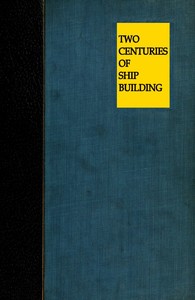
Two Centuries of Shipbuilding by the Scotts at Greenock — Context and Discussion
(0 User reviews)
100
Project Gutenberg
2017
Not confirmed
Scotts' Shipbuilding & Engineering Co. Ltd.; Shipbuilding -- Great Britain
Readers of public-domain and historical texts
Project Gutenberg digital edition
en
Edition facts
Words
37,927
Reading time
165 min
Text sections
60
Before opening Two Centuries of Shipbuilding by the Scotts at Greenock — Context and Discussion, the edition data offers a quick orientation: 37,927 words, 2 hr 45 min estimated reading time, and 60 detected text sections.
The text analysis averages about 17.2 words per sentence, while the detected sections provide another way to judge how the source is divided.
Project Gutenberg metadata also associates the work with “Scotts' Shipbuilding & Engineering Co. Ltd.,” connecting these edition facts with the source record’s subject description.
Source:
Project Gutenberg record #54667
This editorial note examines the language, narrative voice, and shifts in pace in a 1906 company history of Scotts' Shipbuilding & Engineering Co. Ltd., drawing on excerpts that show a blend of technical detail, family chronicle, and patriotic rhetoric.
Read the complete public-domain text at its original source.
Read on Project GutenbergThe work opens with a Ruskin epigraph extolling a ship of the line as “the most honourable thing that man, as a gregarious animal, has ever produced,” setting a lofty, almost moral tone. The narrative voice that follows is corporate yet personal, often shifting between dry statistical tables and anecdotal passages about the Scott family. For instance, the account of the Mudhook Yacht Club includes a tradition of initiating members with a “coil of rope, a small marlinspike, a chart and dividers,” a detail that momentarily slows the pace into a vignette. The text is partly reprinted from Engineering magazine, which may explain its hybrid character: part technical report, part family memoir.
A Voice That Alternates Between Ledger and Legend
The prose moves abruptly from the impersonal to the intimate. Tables I through V present cold data—tonnages, coal consumption, gun sizes—in a style typical of an engineering journal. Yet the personalia section and the yachting chapter adopt a warmer, almost clubby register. The description of successive yachts named Greta is narrated with a cumulative rhythm: “The Greta of 1876 was 76 ft. long, and of 53 tons… the Greta of 1898 was 154 ft. long, and of 393 tons.” This repetition, paired with the detail that each yacht was named after a stream, gives the passage a ceremonial quality. The voice occasionally borrows from Victorian hagiography, as when it notes that John Scott, C.B., was elected Commodore of the Royal Clyde Club “in acknowledgment of his services.” Such phrasing elevates the family’s role without overt praise.
Pace Shifts Between Technical Summary and Anecdotal Expansion
The pacing is uneven, and the excerpts suggest the full work may be similarly structured. The opening chapters on sailing ships and steamship development are likely dense with specifications and chronological lists. In contrast, the yachting section slows to dwell on club rituals and the incremental growth of the Greta fleet. The Mudhook Yacht Club anecdote—with its “forecastle bucket and other implements” used in initiation—is a rare moment of narrative expansion. The text then returns to a brisk catalog of yachts built for other owners, such as the Tuscarora, described in a single paragraph with dimensions and amenities. This alternation suggests a work that cannot decide whether it is a reference book or a family chronicle. Readers may find the pace accelerates when the subject turns to naval contracts or engine efficiency, and slows when the Scotts’ personal yachting interests are discussed.
Recurring Details That Anchor the Narrative
Several motifs recur across the excerpts. The name Greta appears repeatedly, linked to a stream on the Halkshill Estate, grounding the family’s maritime achievements in a specific landscape. The phrase “successive steps are marked” (used of the yachts) echoes the book’s own structure of tables and lists. The Ruskin epigraph’s emphasis on “patience, common sense, forethought” is mirrored in the text’s pride in incremental improvement—each yacht is “exactly double the length of the first.” The Mudhook Club’s founding aim to “encourage amateur yacht sailing” contrasts with the professional tone of the engineering sections, hinting at a tension between leisure and industry. These details, though minor, give the work a texture that a purely technical history might lack.
Readers approaching this work should be prepared for a text that oscillates between the statistical and the anecdotal. The excerpts suggest that the book’s value lies not only in its data on shipbuilding progress but also in its glimpses of the social world of Clyde yachting and the Scott family’s self-presentation. Pay attention to the footnotes and tables, which often carry the technical argument, while the main narrative may linger on personal or ceremonial matters. The hybrid origin—partly reprinted from Engineering—may account for these shifts, making the work a document of both industrial history and corporate memory.
Reading about the Scotts’ shipyard, I kept noticing how the family’s pride wove itself into every rivet and ledger line. It felt less like history and more like listening to someone’s quiet fondness for a place. I found that same gentle holding of time in Petroleum — Themes and Context, where industry becomes memory, not just machinery. That lingering warmth stayed with me for days.
There are no reviews for this eBook.
There are no comments for this eBook.
Reader reflection
Take a moment to reflect on this book
Create a short personal record of your experience with this book.
Your progress
0
/
10
2
Did this book hold your interest?
3
Would you encourage someone else to read it?
4
How demanding did the text feel?
5
Which part made the strongest impression?
6
Did the story or argument move comfortably?
7
How would you rate its originality?
8
How understandable was the text?
9
What did this book teach you most?
10